

15 companies from the US Fortune 500 list, leading pharmaceutical companies, telecommunications operators, and 140 hospitals in Poland – these are just some of the users of Efento solutions. Today, the Polish company’s products are used by organizations for which monitoring reliability, data security, and business continuity are of critical importance.
Efento Cloud is capturing the market in a way that is the ultimate form of recommendation for a technology manufacturer – satisfied users recommend the solution to other companies and institutions looking for a proven monitoring system. This is how the number of deployments grows, and with it, trust in Polish technology.
Efento exports its solutions to 65 countries worldwide. This achievement is not the result of a single spectacular product or a short-lived IoT trend. It is the result of many years of consistent dedication to quality, reliability, security, and the development of modern solutions.
Efento Cloud – less manual control, less documentation, less risk.
One system that helps protect medicines, reduce losses, and relieve staff.
A hospital consists of thousands of processes, devices, and rooms whose proper functioning is essential for patient safety. One of these is ensuring proper storage conditions for medicines, vaccines, medical supplies, and laboratory samples.
Efento Cloud enables automated monitoring and control.
The system collects data from wireless loggers, analyzes them, reports irregularities, and automatically creates a measurement history. This allows staff to focus on their core tasks instead of spending time on routine checks.
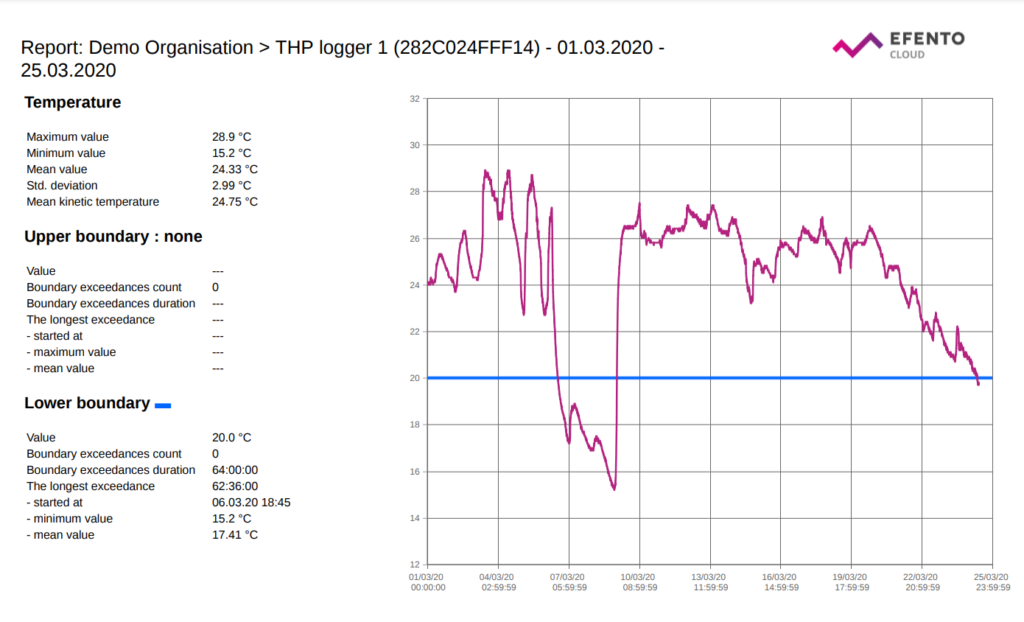
Sample report from the Efento Cloud system
The most important benefit: immediate information about a problem
Simply recording the temperature does not protect medicines. The ability to quickly detect irregularities and take action is crucial.
Efento Cloud can automatically send alarms when the temperature exceeds set thresholds. The system can also notify users of other events, such as a loss of communication with a device.
Consequently, staff do not need to regularly check every refrigerator or room.
If everything is normal – the system requires no intervention. If a problem arises – the system notifies the right person.
This is a simple rule that can significantly reduce the workload associated with daily monitoring.
Lower risk of losing expensive medicines and medical materials
A failure of a refrigerator, freezer, or installation can lead to the loss of products stored inside.
In the case of medicines, vaccines, biological preparations, or laboratory samples, the cost of such an incident can be very high. An even greater problem may be the lack of product availability needed for patient treatment.
Efento Cloud allows for the early detection of irregularities and notifies the responsible personnel.
Thus, automated monitoring is not only a quality control tool, but also an element of risk management and hospital asset protection.
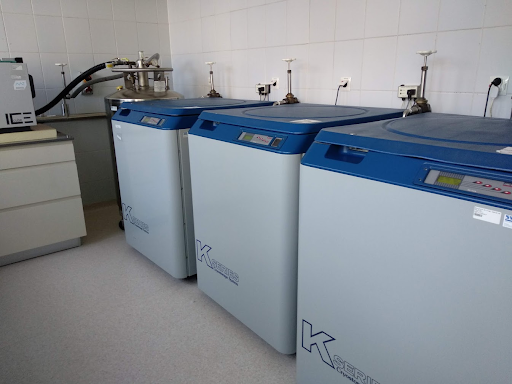
Temperature monitoring in -200°C cryostats – Children’s Hospital in Kraków
The alarm reaches the right person, at the right time
Efento Cloud provides complete flexibility in alarm configuration. The system can send SMS messages, phone notifications, free e-mail messages, and push notifications via the mobile app.
Approximately 80% of Efento Cloud users already utilize e-mail and push notifications – and they are completely free of charge.
You can set both warning and alarm thresholds, as well as define response delays. This ensures that opening a refrigerator briefly or experiencing a temporary temperature spike does not trigger an unnecessary alarm.
Particularly important in a hospital setting, information can be routed directly to the person or team responsible for a specific issue. A loss of connectivity can go exclusively to IT support, a power failure notification to electricians or the technical department, while temperature warnings and alarms regarding stored medicines go to the personnel responsible for their supervision. As a result, everyone receives only the information that actually requires their action.
Fewer unnecessary notifications mean greater alarm effectiveness, and the right alarm reaches the person who can take action much faster.
One system for the entire hospital
Efento Cloud can cover the monitoring of many different areas within a facility:
-
refrigerators and freezers for medicines and vaccines,
-
hospital pharmacy,
-
pharmaceutical warehouses,
-
laboratories,
-
specialized rooms,
-
cleanrooms,
-
medical supply warehouses,
-
technical rooms,
-
other locations where environmental conditions must be monitored.
All information is available in a single system.
For the management, this means a single overview of the situation instead of multiple independent systems and documentation kept in various places.
The system can expand along with the hospital’s needs
Temperature monitoring can be just the beginning.
Efento installations can be expanded with additional types of loggers, allowing a single system to also control other parameters and events critical to hospital operations.
Depending on needs, these may include:
-
differential pressure – e.g., in rooms where maintaining a specific pressure difference is part of environmental condition control,
-
door opening and closing – access control to cold rooms, warehouses, technical rooms, or other secured spaces,
-
flooding – quick detection of water appearance in technical rooms, warehouses, and other areas exposed to installation failures,
-
gas pressure – monitoring gas installation parameters where continuous supervision of their correct operation is required.
Thanks to this, a hospital can gradually transition from monitoring individual parameters to a comprehensive infrastructure and environmental condition supervision system.
Importantly, expansion does not require creating a separate IT system for each new application. Subsequent measurement points can be managed from the same platform.
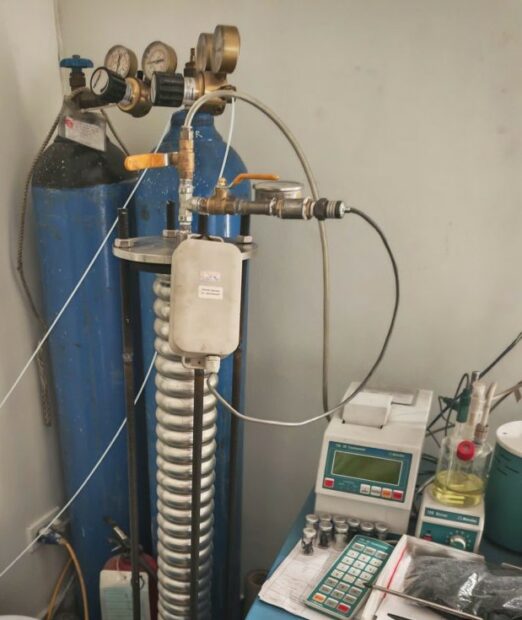
Gas pressure monitoring – hospital in Vietnam
Less manual work, less documentation
In a traditional model, staff must regularly generate and archive reports.
With a few devices, this is relatively simple. However, with dozens or hundreds of points, it becomes a significant organizational burden.
Efento Cloud automates this process. The system guarantees data storage for 6 years and allows for the generation of custom reports over any period.
The system:
measures → records → analyzes → alarms → archives → reports.
This means staff do not have to perform tasks that the system can handle.
This translates to reduced labor costs associated with monitoring and a lower risk of human error.
Automatic documentation and reports
A hospital must not only ensure proper conditions, but also be able to prove that they were maintained correctly.
Efento Cloud automatically aggregates measurement and event history and enables the preparation of reports.
As a result, documentation can be generated without manually copying data from individual devices.
This is particularly important for the hospital pharmacy, laboratories, quality departments, and individuals responsible for inspections and audits.
Less paperwork. Less manual transcription. Easier access to history.
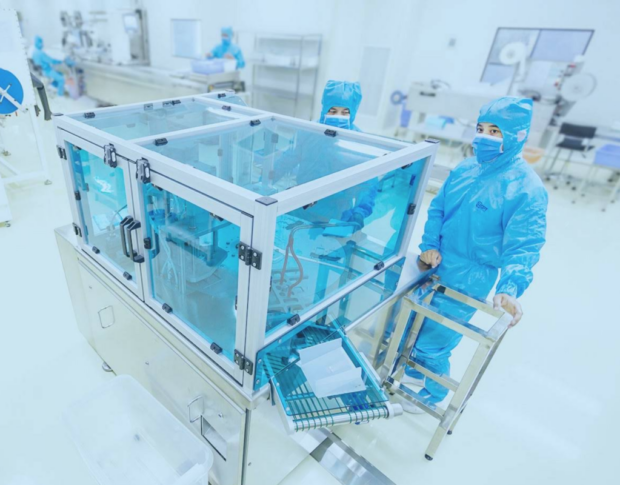
Differential pressure monitoring in cleanrooms
Management sees the status of the entire system
In a large facility, management does not need to analyze every single measurement.
The most important thing is the answer to three questions:
-
Is everything operating correctly?
-
Are there problems requiring a response?
-
Exactly where is the problem located?
Therefore, Efento Cloud can serve as a central monitoring panel for the hospital’s environmental conditions.
Instead of hundreds of isolated data points, management receives an organized overview of the situation, while individuals responsible for specific areas can receive only information relevant to their scope of responsibility.
From a single refrigerator to the entire hospital
Deployment does not have to start by monitoring the entire facility.
You can begin with the most critical points – for example, refrigerators and freezers in the pharmacy – and then expand the system to subsequent departments, laboratories, warehouses, and technical installations.
This approach allows you to:
-
start with the most pressing problem,
-
quickly reap initial benefits,
-
spread the investment over time,
-
gradually increase the scope of monitoring,
-
use a single platform even after system expansion.
Thus, the investment can grow alongside the hospital’s needs.
Simpler management for the IT department
Efento Cloud is a cloud-based solution. Therefore, the hospital does not need to build its own server infrastructure dedicated to running the monitoring system.
Data access is handled via the cloud platform, which simplifies deployment and reduces responsibilities related to infrastructure maintenance.
For the IT department, this means fewer systems to install, update, and maintain.
Possibility of integration with hospital systems
Efento Cloud can also cooperate with other IT systems.
Thanks to integration capabilities, data and alarm information can be forwarded to external applications and systems used by the hospital.
This allows for the future combination of environmental monitoring with other processes related to infrastructure maintenance, quality, or facility management.
An investment that reduces risk
For a hospital director, purchasing a monitoring system should not be evaluated solely through the prism of the logger’s price.
The total cost of the process must be taken into account:
equipment purchase + staff labor + documentation + error risk + risk of medicine loss + failure costs.
Automating monitoring allows several of these costs to be reduced simultaneously.
Therefore, the most important value of the system is not the measurement technology itself, but the reduction of risk and costs associated with hospital operations.
Efento Cloud – one system, many applications
Efento Cloud allows you to build a scalable monitoring system that can cover both medicine storage conditions and selected elements of hospital infrastructure.
Temperature. Humidity. Differential pressure. Door opening. Flooding. Gas pressure.
All this information can be collected and supervised in a single environment.
For the staff, this means less routine work.
For the IT department – fewer independent systems.
For the procurement department – the ability to gradually expand a single investment.
For management – greater control over risk and costs.
And above all for the hospital – greater safety of medicines, medical materials, and infrastructure.
Case studies
“Connected hospital” at the University Medical Center Schleswig-Holstein
Differential Pressure Monitoring in Vietnam
St. Padre Pio’s Hospital in Przemysl
Monitoring of COVID-19 vaccines in hospitals in Thailand
Monitoring of clean rooms and vaccines in University Children’s Hospital of Cracow
Implementation of Efento Cloud temperature and humidity monitoring system Poland